
QData
Structured, unstructured and document data connected — shaped for RAG, CAG and TAG based AI to use.
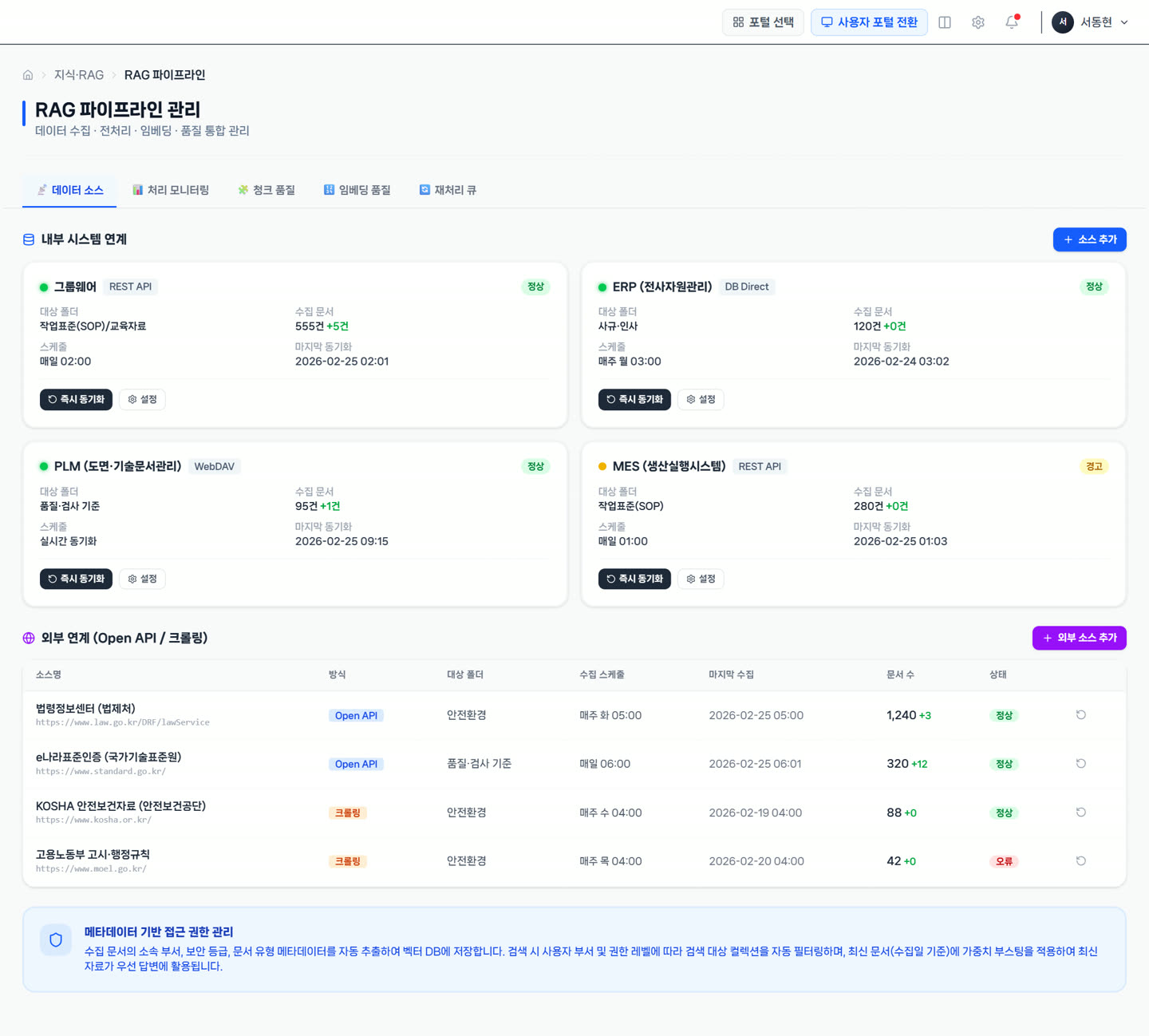
Pipeline
One flow, from collection to useFrom controllers and instruments to operating systems, via standard connectors— and if the link drops, data is held at the edge.
Unstructured data
Documents, images, even speechDocuments that mix tables and drawings are broken into units of meaning, and text and speech recognition turn them into data you can search and train on.
Meaning, not just matching
Beyond search, to inferenceA shared data format and vocabularybrings differing names and units into line, and supports search by relationship as well as by meaning.
Running data and models
Quality and accuracy togetherData quality and change are watched, and on drift the model is retrained and redeployed.
Data piled up in different formats and to different rules, brought together
QData connects what is scattered across systems and teams, and puts it in a form analysis and AI can work with.
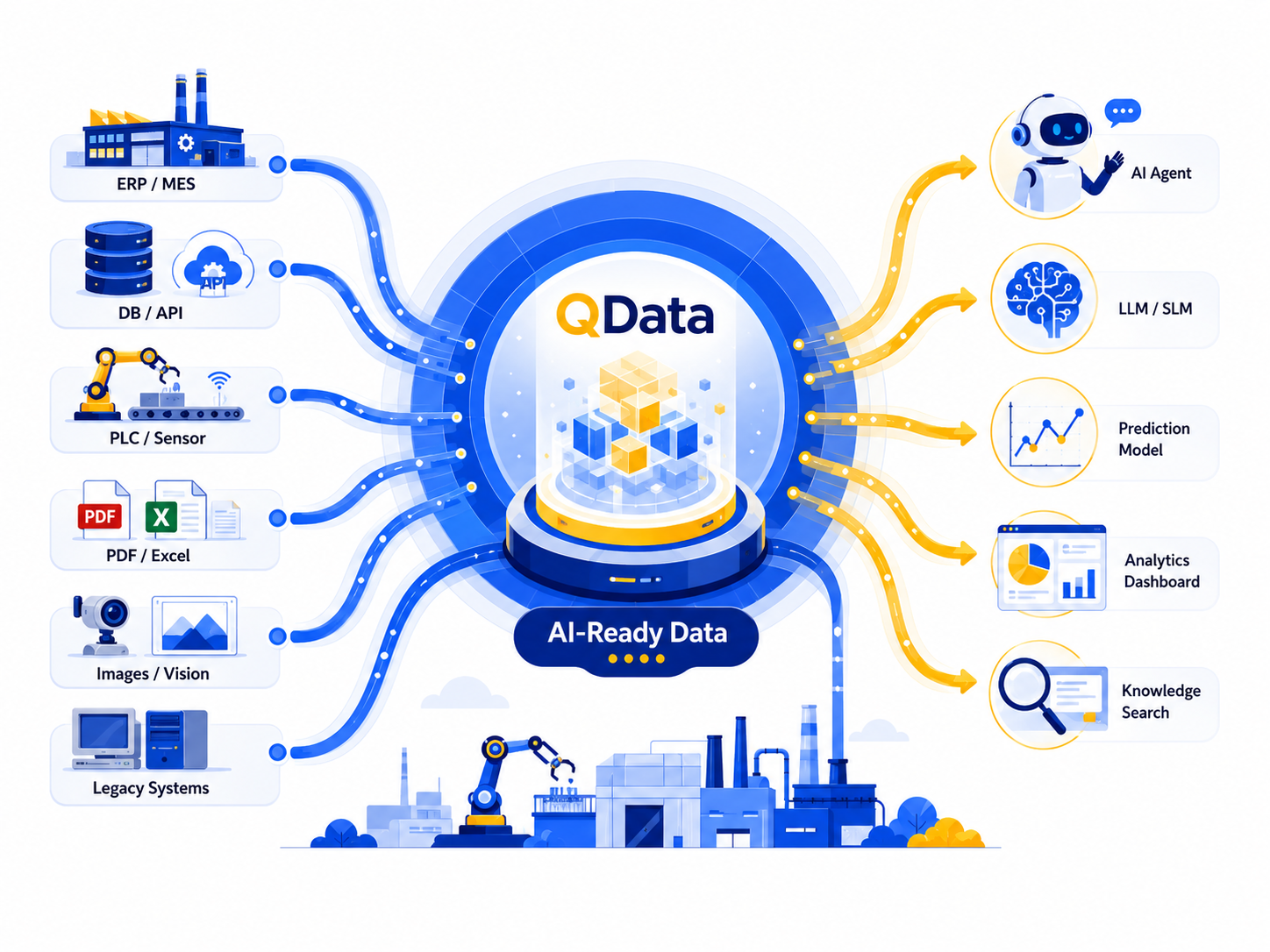
How the data becomes usable by AI
Scattered sources are connected, refined through six steps, shaped for their purpose, and carried on into services.
Data with quality, consistency and context → ready for AI
What turns data into an asset
Every step from collected data to findable knowledge, managed in one place.
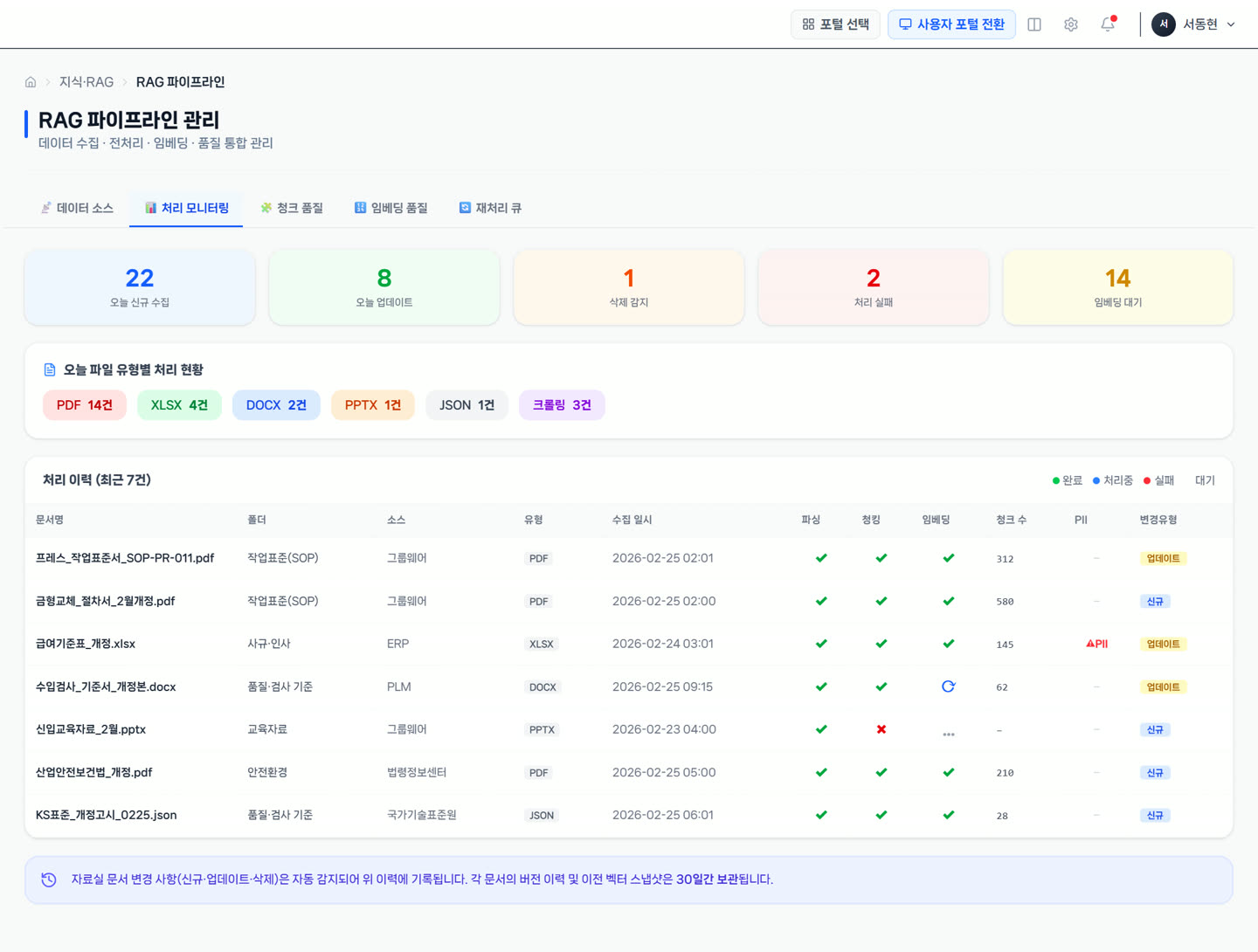
Following the work
For each document, see how far it has got — from analysis through to appearing in search.
- Stage by stage Analysis, splitting and embedding shown per document
- Change detection New, updated and deleted items picked up automatically
- Personal data flagged Documents holding sensitive information marked separately
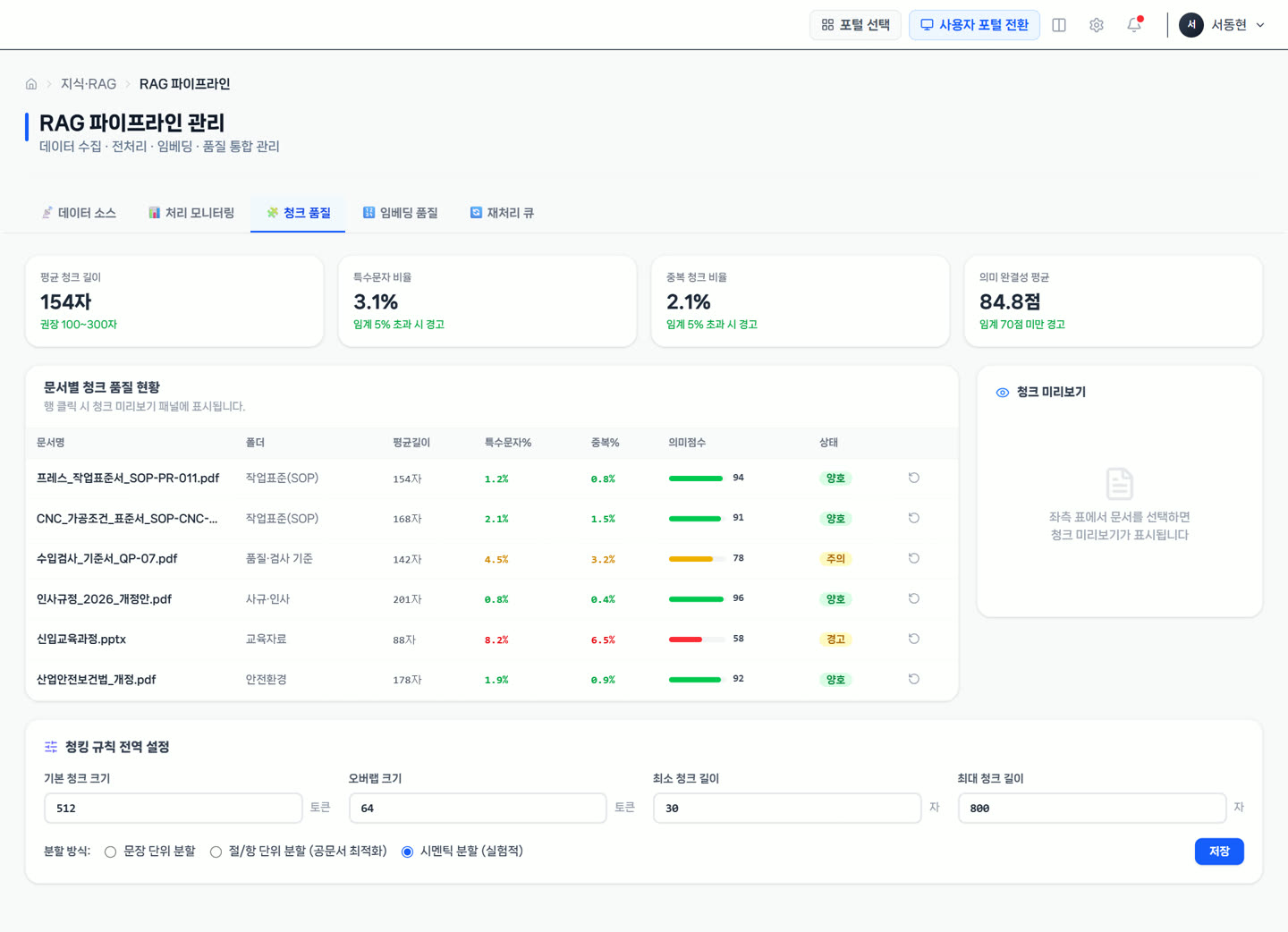
Getting the search unit right
How a document is split changes what search returns. The result is checked against measures, and search quality improves.
- Quality measures Length, special characters, duplication and whether each piece stands on its own
- Per-document check Documents past the threshold marked as caution or warning
- Splitting rules Size, overlap and method, set once for everything
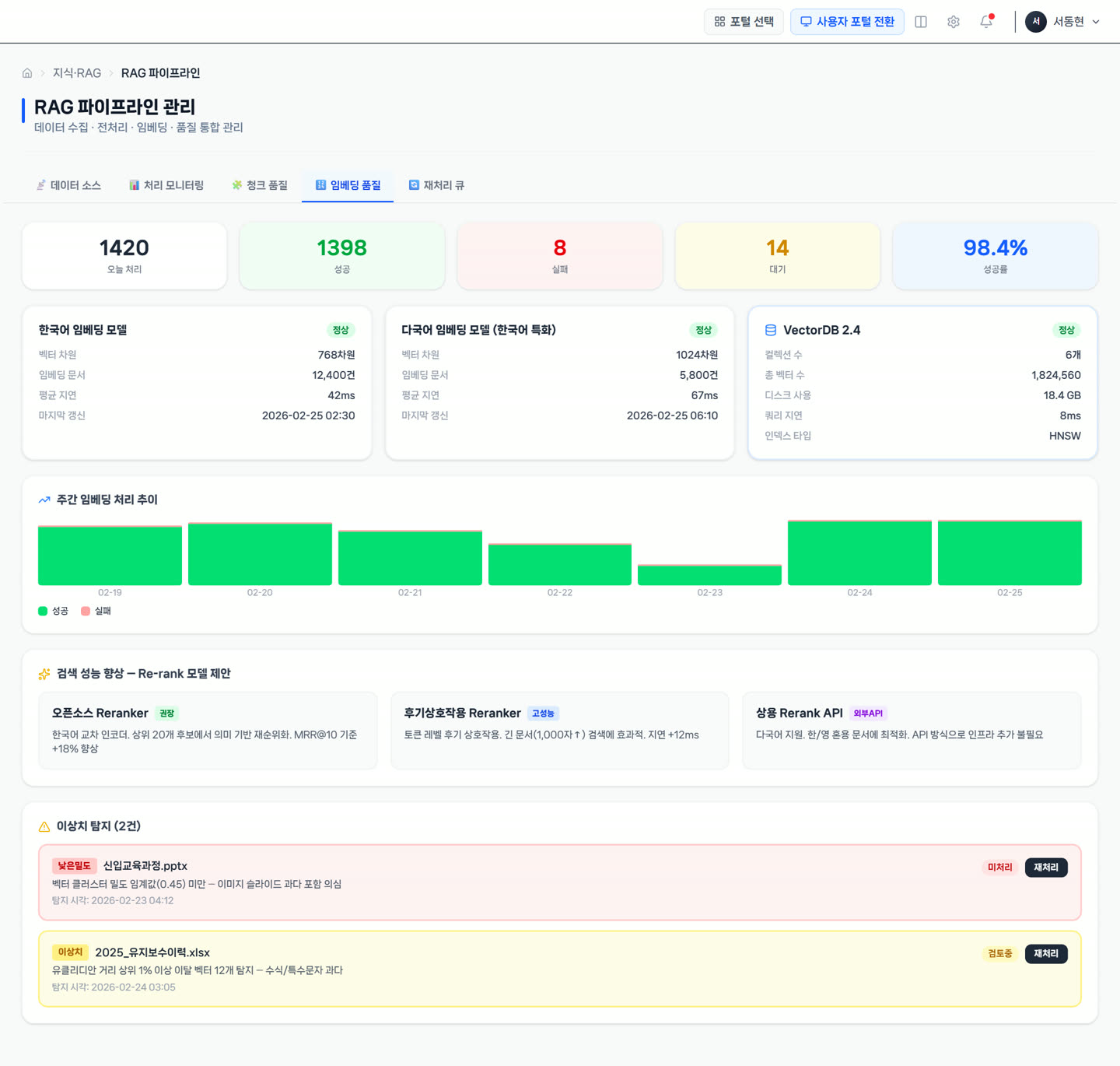
Checking vector quality
Text becomes vectors the AI can find, and throughput, latency and index health are watched from then on.
- By model Dimensions, throughput and latency compared
- Index health Collections, disk use and index type
- Re-ranking review Candidates for better search quality, compared
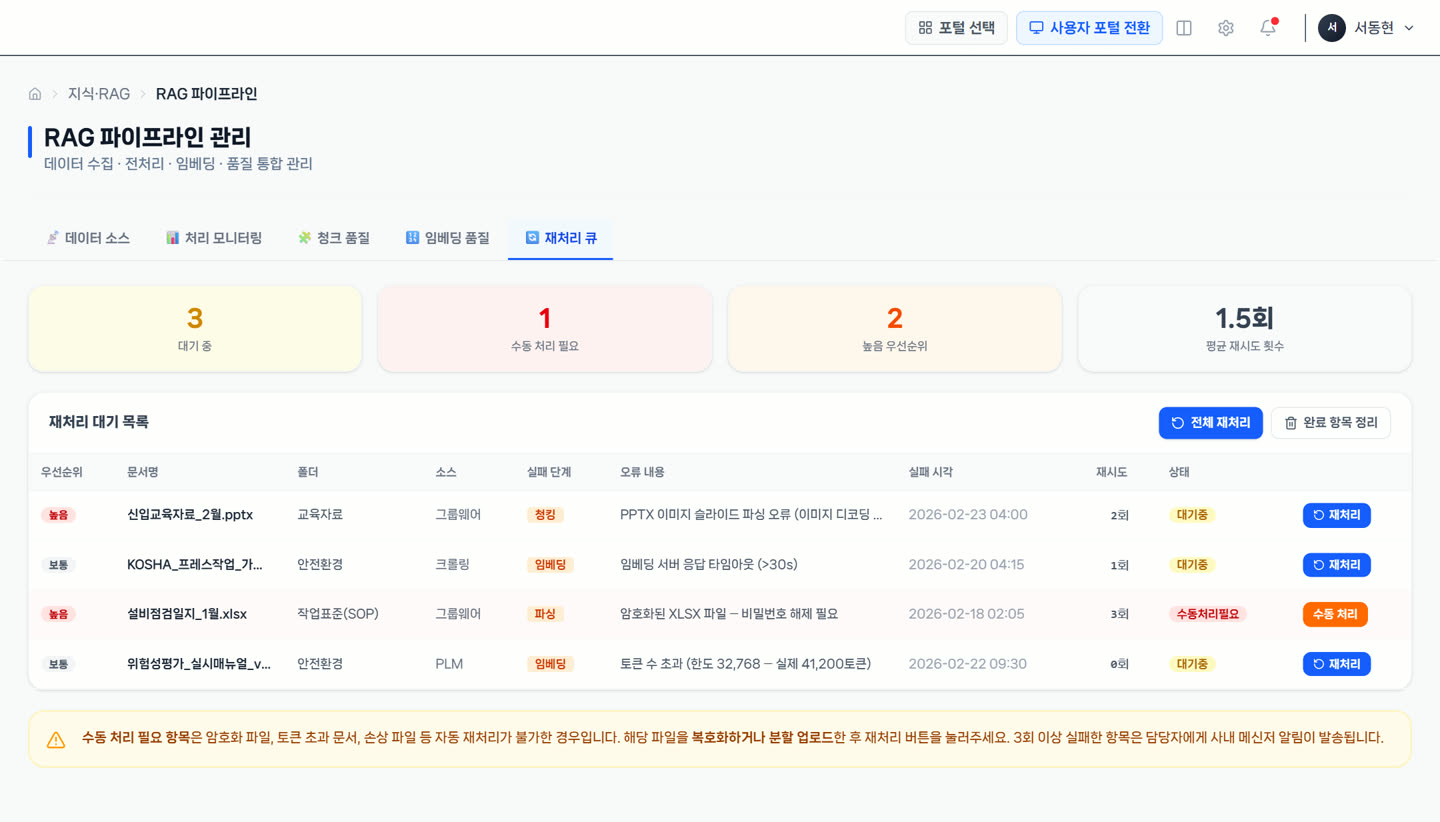
Reprocessing what failed
Documents stalled by encryption or size are found and run again, automatically or by hand.
- Where it stopped Recorded — whether it failed at analysis, splitting or embedding
- Automatic retry A queue managed by retry count and priority
- Handing it to a person What cannot recover on its own is passed to someone
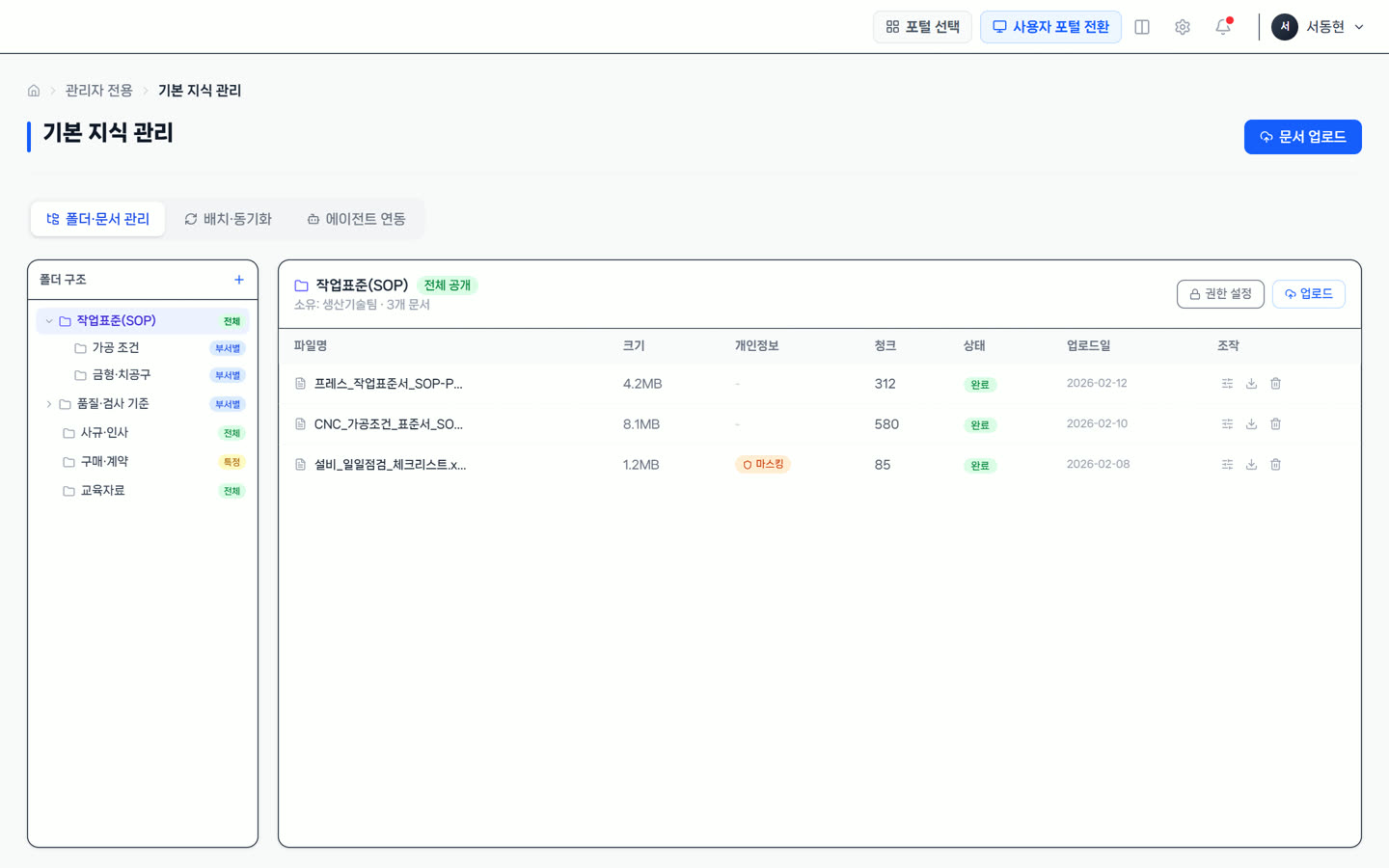
Access by permission
A user’s permissions decide which documents the AI may draw on, and personal data is masked.
- Folder-level permission Open to all, to a department, or to a named few
- Masking personal data Documents holding sensitive fields are flagged and covered
- What has landed Chunk count and processing state per document
Built on the standards the industry already uses
Designed with reference to industrial interoperability standards and established data management practice.
It suits organisations like these
For organisations whose data is too scattered to start with AI at all.
Manufacturers stuck at data preparation
Tag schemes and units differ line by line, so every trial starts from cleansing all over again — leaving no time to improve the model itself
Where the plant network and the office network are separate
Equipment data and business system data never meet, so a quality problem cannot be traced back to the machine
Where technical documents are scattered
Work standards, inspection logs and equipment manuals pile up as documents, and the evidence you need is slow to find
Where the network is closed or separated
Public sector and energy settings that must build standardisation and AI on data which is never allowed to leave